www.uitgedu.com | 自然英语拼读 | KET | PET | 英语点读学习资料
Practical Methods for Developing Critical Thinking: A Journey from Classroom to Real Life
November 11, 2025
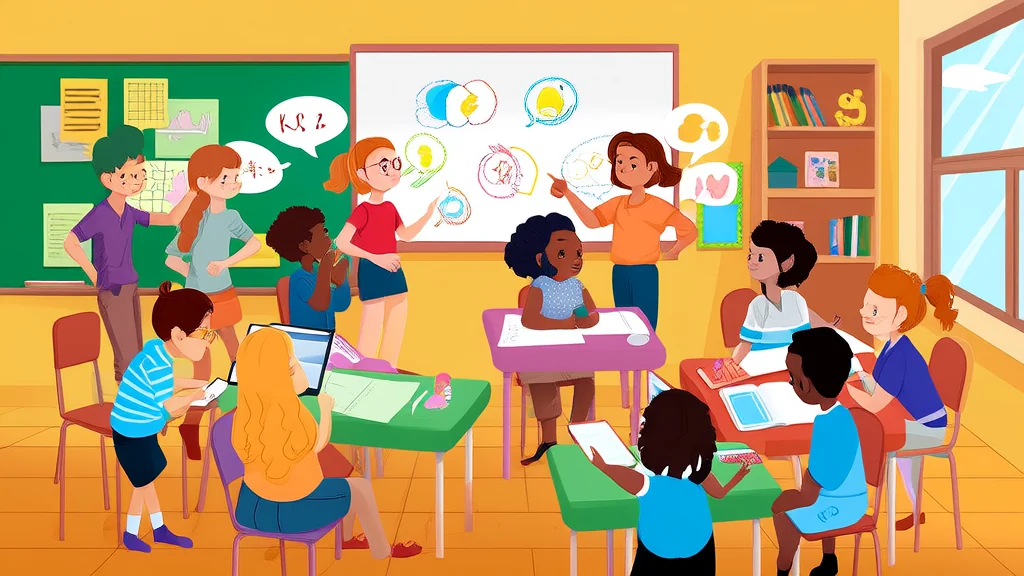
It was a crisp autumn morning when I walked into Ms. Thompson's 8th-grade classroom. The room was abuzz with the usual chatter, but today, something felt different. As I settled in, I noticed that the desks were arranged in a circle, and the students were huddled in small groups, each one holding a piece of paper with a complex problem. The problem was not a typical math or science question; it was a real-world scenario about a local environmental issue. The students were tasked with developing a solution, and they were deeply engaged, debating, and collaborating. This was no ordinary lesson; it was a masterclass in critical thinking.
Ms. Thompson, a veteran teacher with over two decades of experience, had transformed her classroom into a think tank. She had carefully crafted this activity to challenge her students to think beyond the surface, to question, to analyze, and to synthesize information. As I watched, I realized that this was more than just a lesson; it was a blueprint for developing critical thinking skills in our young learners. And it was working. The students were not just passively receiving information; they were actively constructing knowledge, and their enthusiasm was palpable.
The Power of Critical Thinking: Why It Matters
Critical thinking is the intellectual process of actively and skillfully conceptualizing, applying, analyzing, synthesizing, and evaluating information to reach an answer or conclusion. In today's rapidly changing world, where information is abundant and often contradictory, the ability to think critically is more important than ever. It equips students with the tools to navigate complex problems, make informed decisions, and become independent, lifelong learners.
Research has shown that students who develop strong critical thinking skills are better prepared for the challenges of higher education and the workforce. They are more likely to excel in academic pursuits, as well as in their professional and personal lives. Critical thinking fosters creativity, enhances problem-solving abilities, and promotes a deeper understanding of the world around us. It is a skill that transcends subject matter and is applicable across all disciplines, from science and mathematics to literature and the arts.
Understanding the Components of Critical Thinking
Critical thinking can be broken down into several key components, each of which plays a crucial role in the overall process. These components include:
Analysis: The ability to break down complex information into smaller, more manageable parts. This involves identifying the main ideas, distinguishing between relevant and irrelevant information, and recognizing patterns and relationships.
Evaluation: The process of assessing the credibility and reliability of information. This includes questioning assumptions, considering multiple perspectives, and weighing the evidence to form a well-reasoned judgment.
Synthesis: The act of combining different pieces of information to form a coherent whole. This involves integrating diverse ideas, making connections, and creating new insights or solutions.
Inference: The ability to draw logical conclusions based on the available information. This includes making predictions, forming hypotheses, and testing them through further analysis and evaluation.
By developing these components, students can become more adept at navigating the complexities of the world and making informed, thoughtful decisions. But how do we, as educators and parents, help our children develop these essential skills?
Creating a Supportive Environment for Critical Thinking
One of the most important factors in fostering critical thinking is creating a supportive and inclusive learning environment. Students need to feel safe to express their thoughts, ask questions, and take intellectual risks. This means encouraging open dialogue, valuing diverse perspectives, and promoting a culture of curiosity and inquiry.
Teachers can create such an environment by adopting a student-centered approach, where the focus is on the learner rather than the instructor. This involves designing lessons that are engaging, relevant, and challenging, and that encourage students to explore, discover, and reflect. For example, instead of simply lecturing, teachers can use techniques like Socratic questioning, where they pose thought-provoking questions and guide students through a process of self-discovery.
Parents also play a vital role in supporting critical thinking. By engaging in meaningful conversations with their children, asking open-ended questions, and encouraging them to think deeply about the world around them, parents can help foster a love of learning and a habit of critical thinking. Simple activities like reading together, discussing current events, and exploring new ideas can go a long way in nurturing these skills.
Strategies for Teaching Critical Thinking in the Classroom
There are several effective strategies that teachers can use to develop critical thinking skills in their students. One of the most powerful is the use of real-world scenarios and case studies. By presenting students with authentic, complex problems, teachers can challenge them to apply their knowledge and skills in a meaningful context. This not only makes learning more engaging but also helps students see the relevance of what they are learning to their own lives.
Another effective strategy is the use of collaborative learning. When students work in small groups, they have the opportunity to share ideas, debate, and build on each other's thinking. This not only enhances their critical thinking skills but also develops their communication and teamwork abilities. Teachers can facilitate this by providing clear guidelines, assigning roles, and encouraging active participation from all group members.
Project-based learning is another powerful approach. By engaging students in long-term projects that require them to research, plan, and execute, teachers can help them develop a range of critical thinking skills. Projects can be interdisciplinary, allowing students to integrate knowledge from different subjects and apply it to real-world situations. This not only deepens their understanding but also fosters a sense of ownership and pride in their work.
Assessing and Reflecting on Critical Thinking
Assessment is a crucial part of the learning process, and it is equally important when it comes to critical thinking. Traditional assessments, such as multiple-choice tests, may not be the best way to measure critical thinking skills. Instead, teachers should use a variety of assessment methods that allow students to demonstrate their ability to analyze, evaluate, and synthesize information.
One effective method is the use of rubrics. Rubrics provide clear criteria for evaluating critical thinking skills, such as the ability to identify and analyze key issues, consider multiple perspectives, and support arguments with evidence. By using rubrics, teachers can provide specific feedback that helps students understand their strengths and areas for improvement.
Self-reflection is also an important part of the assessment process. Encouraging students to reflect on their own thinking and learning can help them develop metacognitive skills, which are essential for critical thinking. Teachers can facilitate this by providing opportunities for students to write reflections, discuss their thought processes, and set goals for improvement. This not only helps students become more aware of their own thinking but also empowers them to take an active role in their learning.
Practical Applications: Bringing Critical Thinking to Life
Developing critical thinking skills is not just about theory; it is about putting those skills into practice. Here are some practical ways that educators and parents can help students apply critical thinking in real-life situations.
Integrating Critical Thinking into Daily Activities
One of the most effective ways to develop critical thinking skills is to integrate them into everyday activities. For example, when reading a book, teachers and parents can ask questions that encourage students to think deeply about the text. Questions like "What do you think will happen next?" or "Why do you think the character made that decision?" can help students engage with the material on a deeper level.
Similarly, when watching a movie or TV show, parents can discuss the themes, characters, and plot with their children. They can ask questions like "What do you think the message of the story is?" or "How would you have handled the situation differently?" This not only makes the viewing experience more enjoyable but also helps children develop their critical thinking skills.
Encouraging Curiosity and Inquiry
Curiosity is the foundation of critical thinking. By encouraging students to ask questions and explore their interests, educators and parents can help them develop a natural inclination towards critical thinking. This can be as simple as asking, "What do you wonder about?" or "What would you like to learn more about?" and then providing resources and support to help them pursue their inquiries.
For example, if a student is interested in space, a teacher might provide books, videos, and online resources to help them learn more. They could also organize a field trip to a planetarium or invite a guest speaker to talk about astronomy. By following the student's lead and providing opportunities for exploration, teachers and parents can help nurture a love of learning and a habit of critical thinking.
Modeling Critical Thinking
One of the most powerful ways to teach critical thinking is by modeling it. When educators and parents demonstrate their own critical thinking skills, they provide a valuable example for students to follow. This can involve sharing your own thought processes, explaining how you arrived at a decision, and discussing the reasoning behind your actions.
For example, if a parent is faced with a difficult decision, they can involve their child in the process. They can explain the different options, discuss the pros and cons of each, and talk about the factors that influenced their decision. This not only helps the child understand the decision-making process but also shows them the value of critical thinking in real life.
Conclusion: Nurturing the Next Generation of Thinkers
As I left Ms. Thompson's classroom that day, I couldn't help but feel inspired. The energy, the engagement, and the depth of thinking I witnessed were a testament to the power of critical thinking. By creating a supportive environment, using effective teaching strategies, and providing opportunities for real-world application, we can help our students develop the skills they need to succeed in an increasingly complex world.
Whether in the classroom or at home, the journey to develop critical thinking is a shared one. It requires the commitment and collaboration of educators, parents, and students. By working together, we can nurture the next generation of thinkers, problem solvers, and leaders. And in doing so, we not only prepare them for the future but also enrich their lives and the world around them.
So, let us embrace the challenge, ask the tough questions, and encourage our children to think deeply, critically, and creatively. For in the end, it is not just about the answers they find, but the journey of discovery that shapes them into the thoughtful, informed, and compassionate individuals we hope they will become.