Unlocking Potential: The Power of Multiple Intelligence Theory in K12 Education
December 01, 2025
A Day in the Life of Ms. Thompson's Classroom
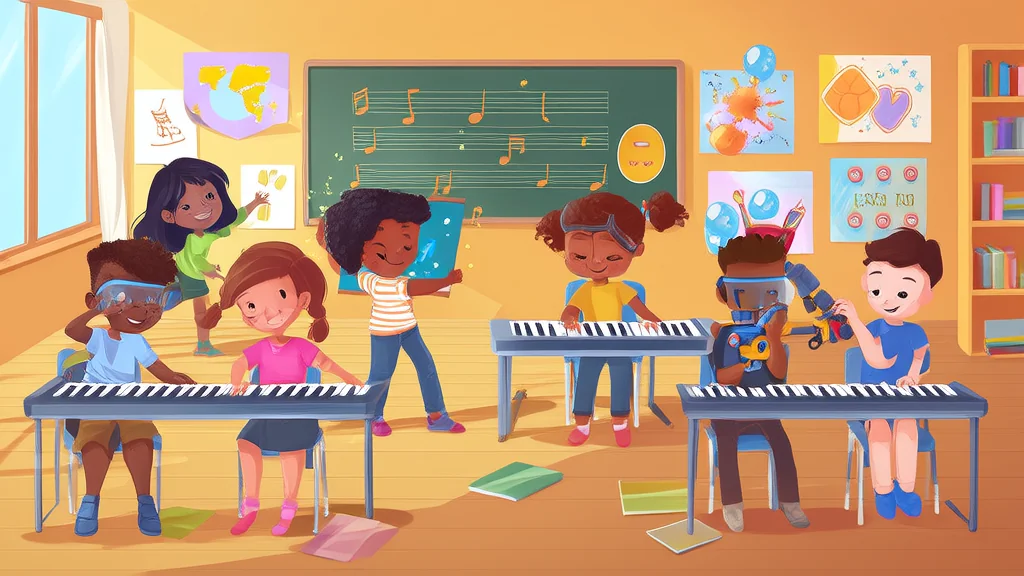
It was a crisp autumn morning when I first visited Ms. Thompson's 6th-grade classroom. The room buzzed with energy as students engaged in a variety of activities. In one corner, a group of students huddled around a table, working on a complex puzzle. Across the room, another group was engrossed in a lively debate about a recent science experiment. Meanwhile, a few students were quietly sketching diagrams and writing poetry. As I watched, I couldn't help but be struck by the diversity of learning styles and the seamless integration of different activities. This was not your typical classroom; this was a place where every student found their own unique path to learning.
Ms. Thompson, a seasoned educator with over two decades of experience, had transformed her classroom into a dynamic learning environment. She believed in the power of Howard Gardner's Multiple Intelligence (MI) Theory, which posits that there are eight distinct types of intelligence: linguistic, logical-mathematical, spatial, bodily-kinesthetic, musical, interpersonal, intrapersonal, and naturalistic. By recognizing and nurturing these diverse intelligences, Ms. Thompson had created a space where every student could thrive.
The Foundations of Multiple Intelligence Theory
Howard Gardner, a developmental psychologist, introduced the Multiple Intelligence (MI) Theory in his 1983 book, Frames of Mind: The Theory of Multiple Intelligences. Gardner challenged the traditional notion of a single, general intelligence and instead proposed that individuals possess a range of intelligences, each with its own strengths and weaknesses. This theory has since become a cornerstone in educational psychology, offering a more nuanced and inclusive approach to teaching and learning.
According to Gardner, the eight intelligences are:
- Linguistic Intelligence: The ability to use language effectively, both orally and in writing.
- Logical-Mathematical Intelligence: The ability to reason, solve problems, and think logically.
- Spatial Intelligence: The ability to think in three dimensions and to visualize and manipulate objects.
- Bodily-Kinesthetic Intelligence: The ability to use one's body to solve problems or create products.
- Musical Intelligence: The ability to perceive, discriminate, transform, and express musical forms.
- Interpersonal Intelligence: The ability to understand and interact effectively with others.
- Intrapersonal Intelligence: The ability to understand oneself and to use this knowledge for self-reflection and self-regulation.
- Naturalistic Intelligence: The ability to understand, appreciate, and work with the natural world.
Each of these intelligences is present in varying degrees in every individual, and they can be developed and enhanced through targeted educational practices. By acknowledging and leveraging these diverse intelligences, educators can create more inclusive and effective learning environments.
The Benefits of Applying MI Theory in K12 Education
One of the most significant benefits of applying MI Theory in K12 education is its potential to increase student engagement and motivation. When students are taught in a way that aligns with their dominant intelligences, they are more likely to feel connected to the material and motivated to learn. For example, a student with strong bodily-kinesthetic intelligence may find it easier to grasp mathematical concepts through hands-on activities, such as building geometric shapes with blocks, rather than through traditional lectures and worksheets.
Another key benefit is the promotion of a more inclusive and equitable learning environment. Traditional education often favors linguistic and logical-mathematical intelligences, which can marginalize students who excel in other areas. By incorporating a variety of teaching methods and activities, educators can ensure that all students have the opportunity to succeed. This not only boosts academic performance but also fosters a sense of belonging and self-worth among students.
MI Theory also supports the development of critical thinking and problem-solving skills. When students are exposed to multiple ways of approaching a problem, they are more likely to develop flexible and creative thinking. For instance, a student with strong spatial intelligence might solve a math problem by visualizing it, while a student with strong interpersonal intelligence might benefit from discussing the problem with peers. This multifaceted approach encourages students to think outside the box and to develop a deeper understanding of the material.
Challenges and Criticisms of MI Theory
While MI Theory has gained widespread acceptance and implementation in many educational settings, it is not without its critics. One common criticism is that the theory lacks empirical evidence and is based more on anecdotal observations than rigorous scientific research. Some argue that the concept of multiple intelligences is too broad and that it can be difficult to measure and assess accurately.
Another challenge is the practical implementation of MI Theory in the classroom. Many teachers and schools face constraints such as limited resources, time, and training. Incorporating a wide range of teaching methods and activities can be time-consuming and may require additional support and professional development. Additionally, some educators may struggle with the idea of tailoring instruction to individual students, as it can be logistically challenging in a large, diverse classroom.
Despite these challenges, many educators and researchers believe that the benefits of MI Theory outweigh the drawbacks. By providing a framework for understanding and addressing the diverse needs of students, MI Theory offers a valuable tool for creating more effective and inclusive learning environments.
Practical Applications of MI Theory in the Classroom
Implementing MI Theory in the classroom does not require a complete overhaul of the existing curriculum. Instead, it involves making small, intentional changes to incorporate a variety of teaching methods and activities. Here are some practical strategies for applying MI Theory in K12 education:
1. Diversify Teaching Methods: Use a mix of instructional approaches to cater to different intelligences. For example, when teaching a history lesson, you might: - Linguistic Intelligence: Provide reading materials and encourage discussion. - Logical-Mathematical Intelligence: Create timelines and charts to help students understand the sequence of events. - Spatial Intelligence: Use maps and visual aids to illustrate geographical and historical contexts. - Bodily-Kinesthetic Intelligence: Organize role-plays or reenactments to bring historical events to life. - Musical Intelligence: Play music from the era and discuss its cultural significance. - Interpersonal Intelligence: Facilitate group projects and discussions to promote collaboration. - Intrapersonal Intelligence: Encourage reflective journaling and personal connections to the material. - Naturalistic Intelligence: Explore the natural environment and its impact on historical events.
2. Create a Multisensory Learning Environment: Engage students' senses by incorporating a variety of stimuli. For example, in a science class, you might: - Visual: Use videos, diagrams, and models to explain complex concepts. - Auditory: Play recordings of nature sounds or scientific experiments. - Kinesthetic: Conduct hands-on experiments and field trips. - Tactile: Provide materials for students to touch and manipulate, such as rocks, plants, and lab equipment.
3. Foster Student Autonomy and Choice: Allow students to choose how they want to demonstrate their understanding of a topic. For example, after a unit on environmental science, students might: - Linguistic Intelligence: Write an essay or give a presentation. - Logical-Mathematical Intelligence: Create a data analysis project. - Spatial Intelligence: Design a poster or infographic. - Bodily-Kinesthetic Intelligence: Build a model or conduct a physical demonstration. - Musical Intelligence: Compose a song or create a video. - Interpersonal Intelligence: Collaborate on a group project or lead a class discussion. - Intrapersonal Intelligence: Reflect on their learning in a journal or personal essay. - Naturalistic Intelligence: Conduct a field study or create a nature guide.
Conclusion: Embracing the Diversity of Intelligence
As I left Ms. Thompson's classroom that day, I was filled with a sense of hope and inspiration. Her commitment to recognizing and nurturing the diverse intelligences of her students had created a truly transformative learning environment. By embracing the principles of Multiple Intelligence Theory, educators like Ms. Thompson are not only enhancing academic performance but also fostering a love of learning and a sense of self-worth in their students.
As we continue to navigate the ever-evolving landscape of K12 education, it is essential that we remain open to innovative and inclusive approaches. MI Theory offers a powerful framework for understanding and addressing the unique needs of each student. By diversifying our teaching methods, creating multisensory learning environments, and fostering student autonomy, we can unlock the full potential of every learner and create a brighter future for all.
So, let us embrace the diversity of intelligence and work together to build classrooms where every student can thrive. After all, the true measure of success in education is not just what students learn, but how they grow and flourish as individuals.