www.uitgedu.com | 自然英语拼读 | KET | PET | 英语点读学习资料
Development and Cultivation of Children's Social Skills: A Journey of Growth
November 25, 2025
It was a crisp autumn morning when I first met little Emma. She was a bright-eyed, 8-year-old girl with a mop of curly hair and a shy smile. Emma had just moved to our small town with her family, and she was about to start her first day at a new school. As we walked through the school gates, I could see the mix of excitement and apprehension in her eyes. The playground was bustling with children laughing, playing, and forming groups. Emma clung to my hand, her grip tight, as if she were afraid to let go. I knew that this moment would be a turning point in her social development, and it reminded me of the importance of nurturing children's social skills from an early age.
The Importance of Social Skills in Child Development
Social skills are the foundation upon which children build their relationships, navigate their environment, and develop a sense of self. These skills include the ability to communicate effectively, understand and manage emotions, and interact positively with others. Research has shown that children with strong social skills are more likely to succeed academically, have better mental health, and form lasting, meaningful relationships. Conversely, children who struggle with social skills may face challenges such as isolation, low self-esteem, and academic difficulties.
One of the key aspects of social skills is emotional intelligence. Emotional intelligence involves the ability to recognize, understand, and manage one's own emotions, as well as the emotions of others. It is a critical component of social competence, as it allows children to empathize with others, resolve conflicts, and build strong, supportive relationships. For example, a child with high emotional intelligence can recognize when a friend is sad and offer comfort, or they can de-escalate a disagreement by acknowledging the other person's feelings and finding a compromise.
The Role of Parents and Educators
Parents and educators play a crucial role in the development and cultivation of children's social skills. They serve as role models, providing guidance, support, and opportunities for practice. One effective way to foster social skills is through modeling. When parents and teachers demonstrate positive social behaviors, such as active listening, empathy, and cooperation, children are more likely to emulate these behaviors. For instance, a parent who listens attentively to their child and validates their feelings is teaching them the importance of empathy and communication.
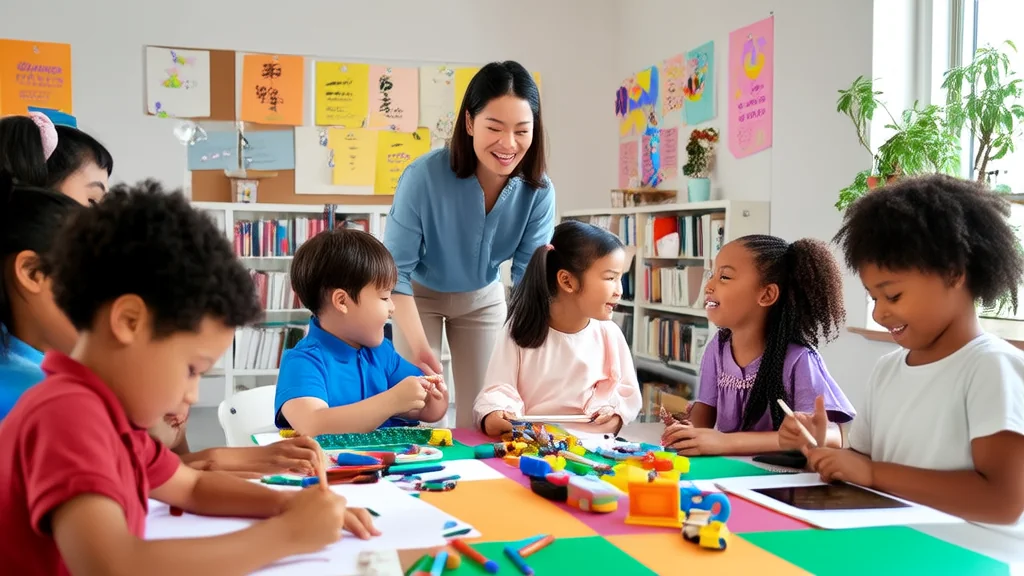
Another important aspect is creating a safe and inclusive environment where children feel comfortable expressing themselves and interacting with others. This can be achieved by setting clear expectations for behavior, providing opportunities for group activities, and encouraging open communication. In the classroom, teachers can use strategies such as cooperative learning, where students work together on projects, and class meetings, where students can share their thoughts and feelings. These activities not only promote social interaction but also help children develop essential skills like teamwork, problem-solving, and conflict resolution.
Peer Interactions and Play
Peer interactions and play are fundamental to the development of social skills. Through play, children learn to negotiate, take turns, and resolve conflicts. Unstructured play, in particular, provides a rich context for social learning. For example, during a game of tag, children must communicate, follow rules, and adapt to changing situations. These experiences help them develop flexibility, resilience, and the ability to read social cues. Additionally, peer interactions provide opportunities for children to practice and refine their social skills in a real-world context. By observing and imitating their peers, children can learn new ways of interacting and gain confidence in their social abilities.
It is also important to note that not all children develop social skills at the same pace. Some may need additional support and guidance. For these children, targeted interventions, such as social skills training, can be highly effective. Social skills training programs often focus on specific areas, such as initiating conversations, maintaining eye contact, and managing emotions. These programs typically involve role-playing, feedback, and reinforcement, helping children to practice and internalize new skills in a structured and supportive environment.
Practical Applications for Parents and Educators
Creating Opportunities for Social Interaction
One of the most effective ways to cultivate children's social skills is by creating opportunities for social interaction. For parents, this can mean arranging playdates, enrolling children in extracurricular activities, or participating in community events. These experiences allow children to meet and interact with a diverse range of peers, exposing them to different perspectives and social situations. For educators, incorporating group activities and collaborative projects into the curriculum can be highly beneficial. For example, a teacher might organize a science fair where students work in teams to design and present their projects. This not only promotes social interaction but also helps children develop important skills like planning, organization, and public speaking.
Teaching Empathy and Perspective-Taking
Empathy and perspective-taking are essential components of social competence. To teach these skills, parents and educators can use a variety of strategies. For example, reading books that explore different emotions and perspectives can be a powerful tool. After reading a story, parents and teachers can engage children in discussions about the characters' feelings and motivations. This helps children to understand and relate to the experiences of others. Another effective strategy is to encourage children to consider multiple viewpoints in real-life situations. For instance, if two children are arguing over a toy, a teacher might ask each child to explain how the other child might be feeling. This exercise helps children to develop a deeper understanding of others' emotions and fosters empathy.
Modeling and Reinforcing Positive Behaviors
Modeling and reinforcing positive behaviors are key to helping children develop strong social skills. Parents and educators should consistently model the behaviors they want to see in children. For example, if a parent wants their child to be more polite, they should make a conscious effort to use polite language and manners in their own interactions. Similarly, teachers can model respectful communication and active listening in the classroom. Reinforcement is also crucial. When children exhibit positive social behaviors, such as sharing, cooperating, or showing kindness, parents and teachers should acknowledge and praise these actions. This positive reinforcement helps to reinforce the desired behaviors and encourages children to continue practicing them.
Conclusion
As I watched Emma take her first steps into the schoolyard, I felt a sense of hope and optimism. I knew that with the right support and guidance, she would soon find her place among her new classmates. The development and cultivation of children's social skills is a journey that requires patience, understanding, and a commitment to providing opportunities for growth. By modeling positive behaviors, creating a safe and inclusive environment, and teaching empathy and perspective-taking, parents and educators can help children build the social skills they need to thrive. As we continue to support and nurture the next generation, let us remember the power of connection, the importance of understanding, and the joy of watching children grow into confident, compassionate, and socially competent individuals.
In the end, the journey of developing social skills is not just about preparing children for the future; it is about helping them to live fully and meaningfully in the present. By investing in their social development, we are giving them the tools they need to build a brighter, more connected world.