www.uitgedu.com | 自然英语拼读 | KET | PET | 英语点读学习资料
Opening Story: The Day the Classroom Transformed
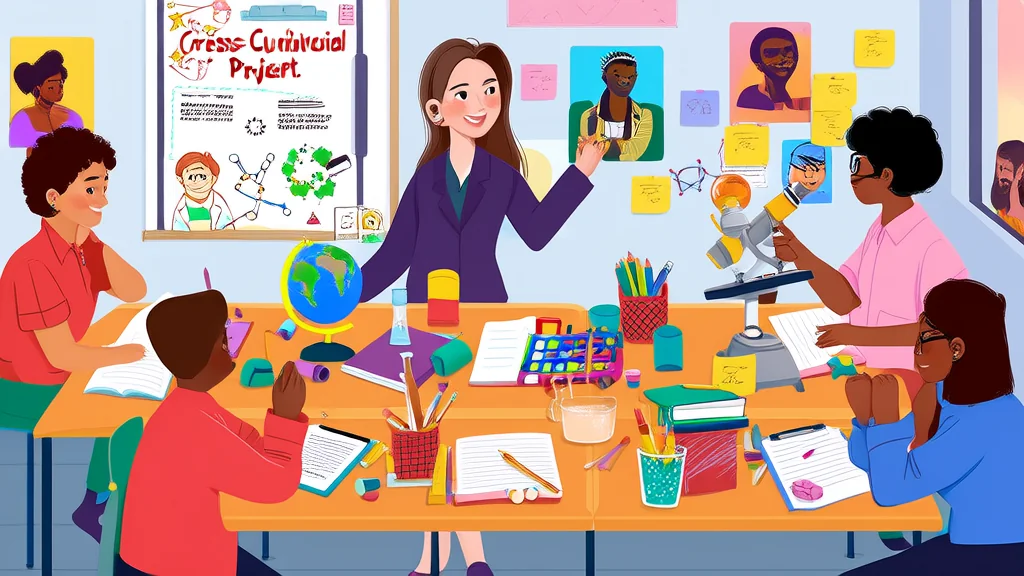
It was a crisp autumn morning, and Ms. Thompson's 8th-grade class at Lincoln Middle School was buzzing with excitement. Today was not just any day; it was the day they would embark on a cross-disciplinary project that promised to be both challenging and rewarding. The students had been divided into small groups, each tasked with designing a sustainable city of the future. The project required them to integrate knowledge from science, math, social studies, and even art. As the students huddled around their tables, sketching, calculating, and debating, Ms. Thompson watched with a sense of pride and anticipation. She knew that this project would not only test their academic skills but also foster a deeper understanding of how different subjects interconnect in the real world.
One group, led by the ever-curious Sarah, was particularly enthusiastic. They had decided to focus on creating a city that could withstand natural disasters. Sarah, who had always been fascinated by geology, took charge of researching the best locations for their city. Meanwhile, her teammate, Jake, a math whiz, was busy calculating the structural integrity of their buildings. Emma, the history buff, was exploring the social and cultural aspects of urban planning, while Leo, the artist, was bringing their vision to life with detailed sketches. As the weeks went by, the students' enthusiasm grew, and so did their understanding of the complex interplay between various disciplines. It was a transformative experience, one that would stay with them long after the project was over.
Professional Analysis: The Power of Cross-Disciplinary Learning
The Need for Interdisciplinary Education
In today's rapidly changing world, the ability to connect and apply knowledge across different fields is more important than ever. Traditional education often compartmentalizes subjects, teaching them in isolation. However, real-world problems are rarely confined to a single discipline. For example, addressing climate change requires an understanding of science, economics, policy, and social dynamics. By integrating these subjects, cross-disciplinary learning prepares students to tackle complex, multifaceted challenges.
Research has shown that interdisciplinary education can lead to improved critical thinking, problem-solving, and creativity. A study by the National Academy of Sciences found that students who engage in cross-disciplinary projects develop a more holistic understanding of the world and are better equipped to make informed decisions. This approach also helps to break down silos, encouraging collaboration and communication among students from diverse backgrounds and interests.
Benefits for Cognitive Development
Cross-disciplinary learning has a profound impact on cognitive development. When students are exposed to multiple perspectives and approaches, they are more likely to develop flexible thinking and adaptability. These skills are crucial in a world where new technologies and global challenges require innovative solutions. For instance, a student who learns about the environmental impact of plastic waste in a science class and then applies that knowledge to a design project in an art class is more likely to develop a deep and lasting understanding of the issue.
Moreover, interdisciplinary education fosters a sense of curiosity and a love for learning. When students see the connections between different subjects, they are more likely to be engaged and motivated. This intrinsic motivation is a key driver of academic success and lifelong learning. A 2024 report by the American Psychological Association highlighted that students who participate in cross-disciplinary projects show higher levels of engagement and a greater sense of purpose in their education.
Enhancing Collaboration and Communication
One of the most significant benefits of cross-disciplinary learning is its emphasis on collaboration and communication. In a traditional classroom, students may work independently or in small, homogeneous groups. However, in a cross-disciplinary project, students must work together, combining their unique strengths and expertise. This collaborative environment mirrors the real world, where professionals from different fields must work together to achieve common goals.
For example, in a project focused on developing a sustainable community, a student with a strong background in biology might work alongside a student skilled in engineering. Together, they can create a more comprehensive and effective solution. This type of collaboration not only enhances the quality of the final product but also builds essential teamwork and communication skills. A 2023 study by the Harvard Graduate School of Education found that students who engage in cross-disciplinary projects show significant improvements in their ability to work effectively in teams and communicate their ideas clearly.
Preparing for the Future Workforce
The modern workforce is increasingly seeking individuals who can think critically, solve complex problems, and work collaboratively. Cross-disciplinary learning is a powerful tool for preparing students for these demands. By engaging in projects that require the integration of multiple subjects, students develop the skills and mindset needed to succeed in a wide range of careers. Whether they go on to become engineers, policymakers, or entrepreneurs, the ability to connect and apply knowledge from different fields will be invaluable.
Furthermore, cross-disciplinary learning helps students to develop a growth mindset, a concept popularized by psychologist Carol Dweck. A growth mindset is the belief that one's abilities and intelligence can be developed through dedication and hard work. When students see the value in combining different subjects and working together, they are more likely to embrace challenges and persist in the face of setbacks. This resilience is a key trait for success in any field.
Practical Applications: Bringing Cross-Disciplinary Learning to Life
Designing Effective Cross-Disciplinary Projects
Creating a successful cross-disciplinary project requires careful planning and a clear understanding of the learning objectives. Teachers should start by identifying the key concepts and skills they want students to master. For example, a project on renewable energy might aim to teach students about the scientific principles behind solar power, the economic implications of energy production, and the social and environmental impacts of different energy sources.
Once the learning objectives are established, teachers can design activities that integrate these concepts. For instance, students might conduct experiments to understand the efficiency of different solar panels, analyze data to compare the costs and benefits of renewable energy, and create presentations to communicate their findings. By providing a variety of tasks, teachers can ensure that all students have the opportunity to contribute and learn in a way that aligns with their strengths and interests.
Supporting Student Collaboration
Collaboration is a cornerstone of cross-disciplinary learning, and teachers play a crucial role in facilitating effective teamwork. One strategy is to use structured roles and responsibilities within groups. For example, in a project on sustainable agriculture, one student might be responsible for researching the environmental impact of different farming practices, another for analyzing the economic viability, and a third for creating a visual presentation. By assigning specific roles, teachers can ensure that all students are actively engaged and contributing to the project.
Additionally, teachers can provide tools and resources to support collaboration. Online platforms like Google Docs and Trello can help students organize their work and communicate effectively. Regular check-ins and feedback sessions can also help to keep the project on track and address any issues that arise. By fostering a collaborative environment, teachers can help students develop the skills and confidence they need to work effectively in teams.
Assessing and Reflecting on Learning
Assessment is a critical component of any educational project, and cross-disciplinary learning is no exception. Teachers should use a variety of assessment methods to evaluate students' understanding and progress. For example, rubrics can be used to assess the quality of students' work, while self-reflection and peer feedback can provide valuable insights into the learning process.
Reflective practices, such as journaling and group discussions, can also help students to internalize what they have learned and identify areas for improvement. For instance, after completing a project on water conservation, students might write a reflection on what they learned, how they worked together, and what they would do differently next time. This reflective practice not only reinforces learning but also helps students to develop metacognitive skills, which are essential for lifelong learning.
Conclusion: Embracing the Future of Education
As we look to the future, it is clear that cross-disciplinary learning will play a vital role in preparing students for the challenges and opportunities of the 21st century. By integrating knowledge from different subjects, fostering collaboration, and promoting critical thinking, this approach equips students with the skills and mindset they need to succeed in a rapidly changing world.
Ms. Thompson's 8th-grade class at Lincoln Middle School is a testament to the power of cross-disciplinary learning. As the students presented their sustainable city projects, it was evident that they had not only gained a deeper understanding of the subject matter but also developed a sense of purpose and a passion for learning. By embracing this approach, educators and parents can help to create a generation of learners who are curious, creative, and ready to make a positive impact on the world.